Directory //
The complete archive of our thoughts, essays, and deep dives.
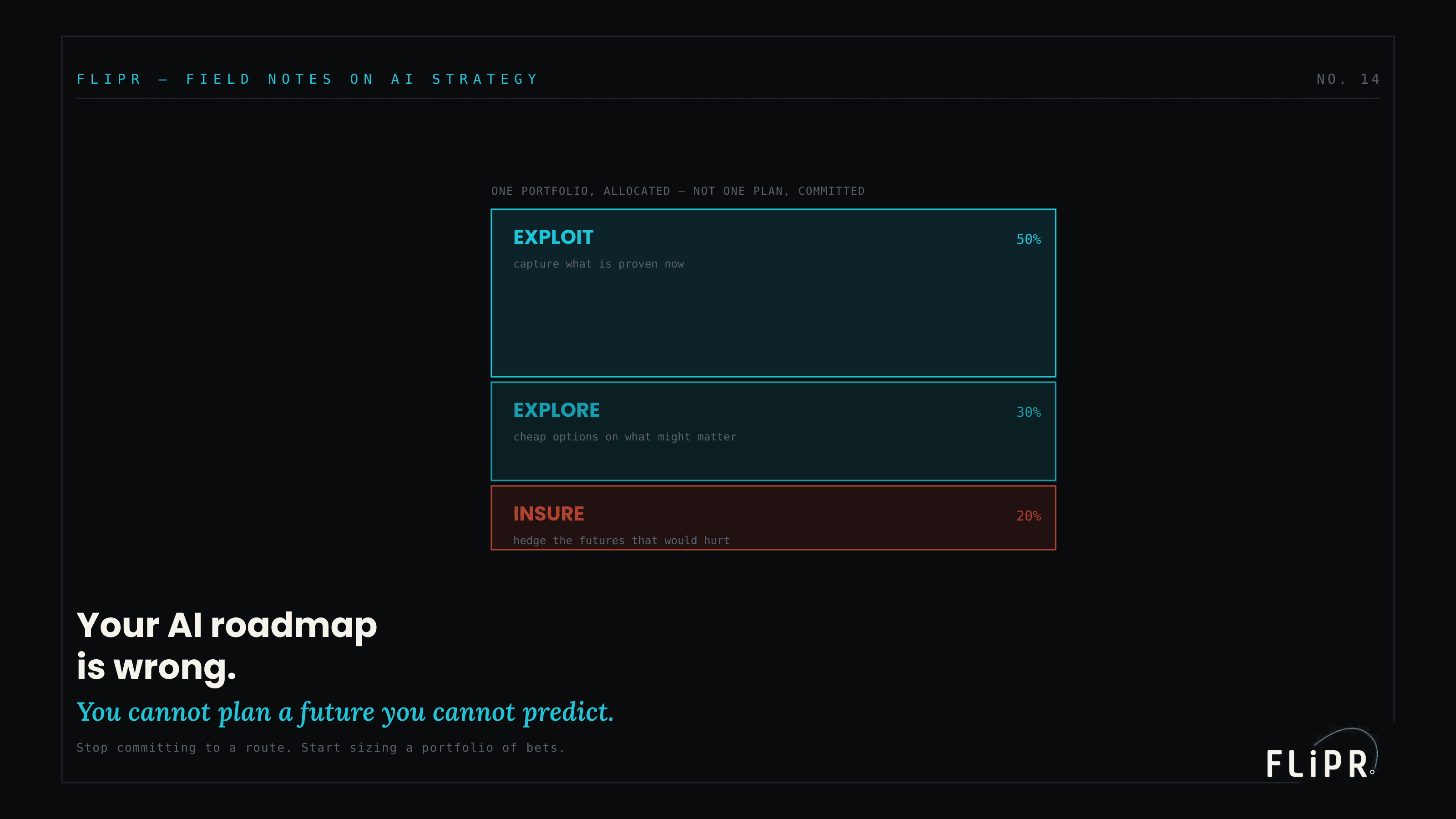
AI moves too fast for a committed roadmap. The Bet Portfolio — exploit, explore, insure — replaces a linear plan with bets you rebalance as the future arrives.
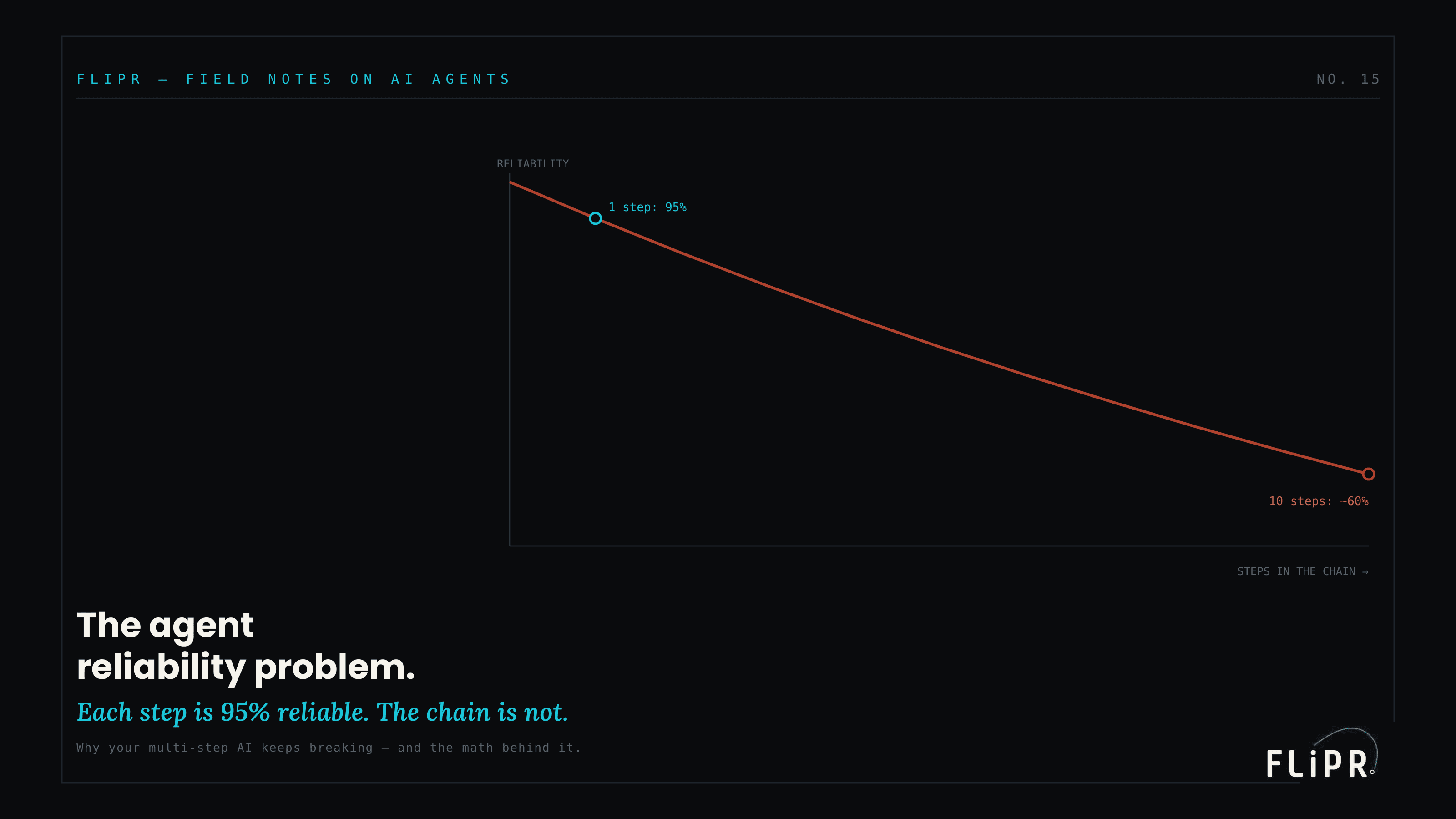
A 95%-reliable step chained ten times is ~60% reliable. The Reliability Tax explains why agent demos collapse in production and how to architect around it.
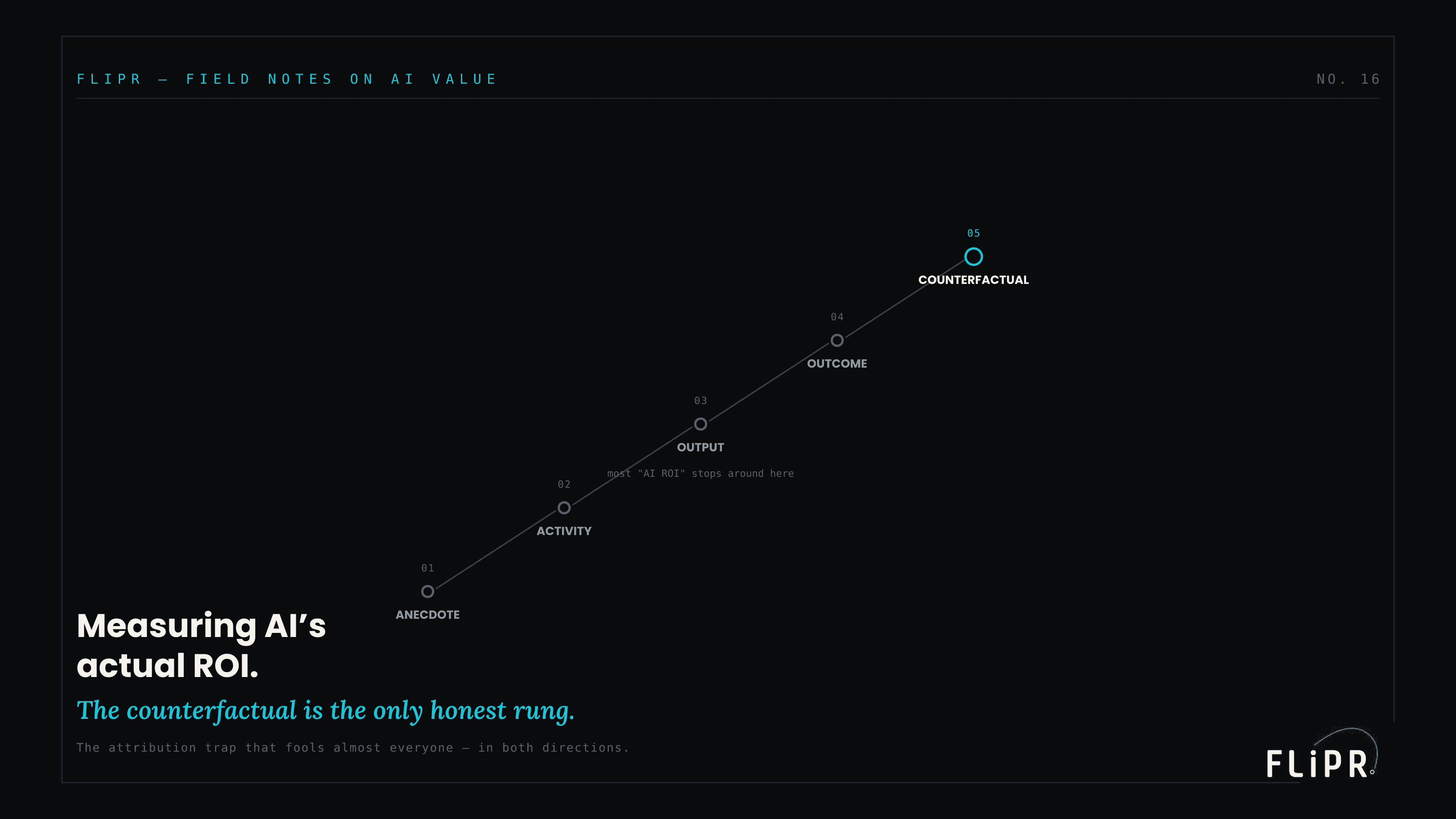
Most AI ROI is attribution theater. The Value Attribution Ladder shows why only the counterfactual rung honestly proves that the AI caused the result.
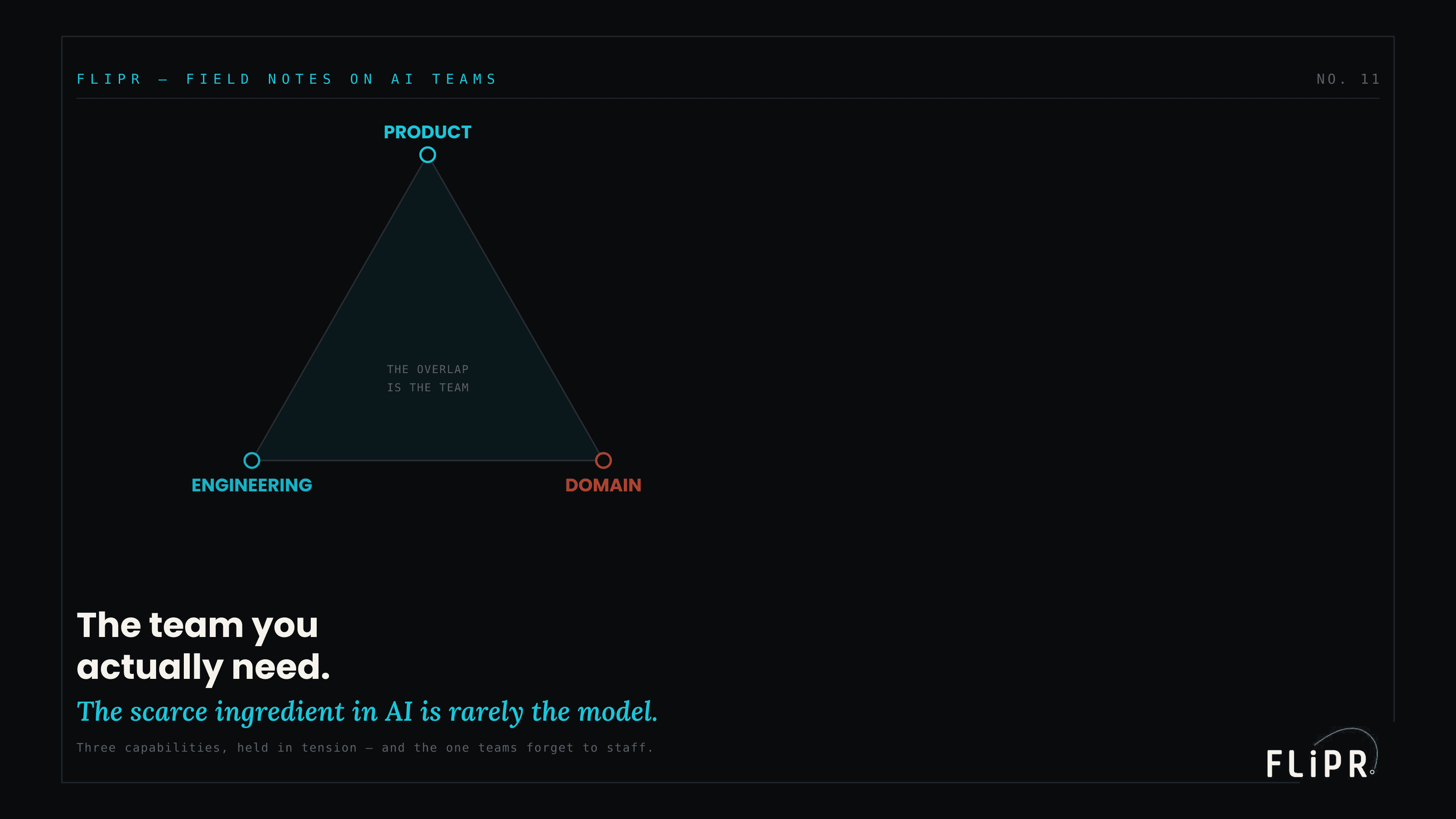
Teams staff AI as if ML talent is the scarce ingredient. The Capability Triangle — product, engineering, domain — shows the missing vertex is usually domain.
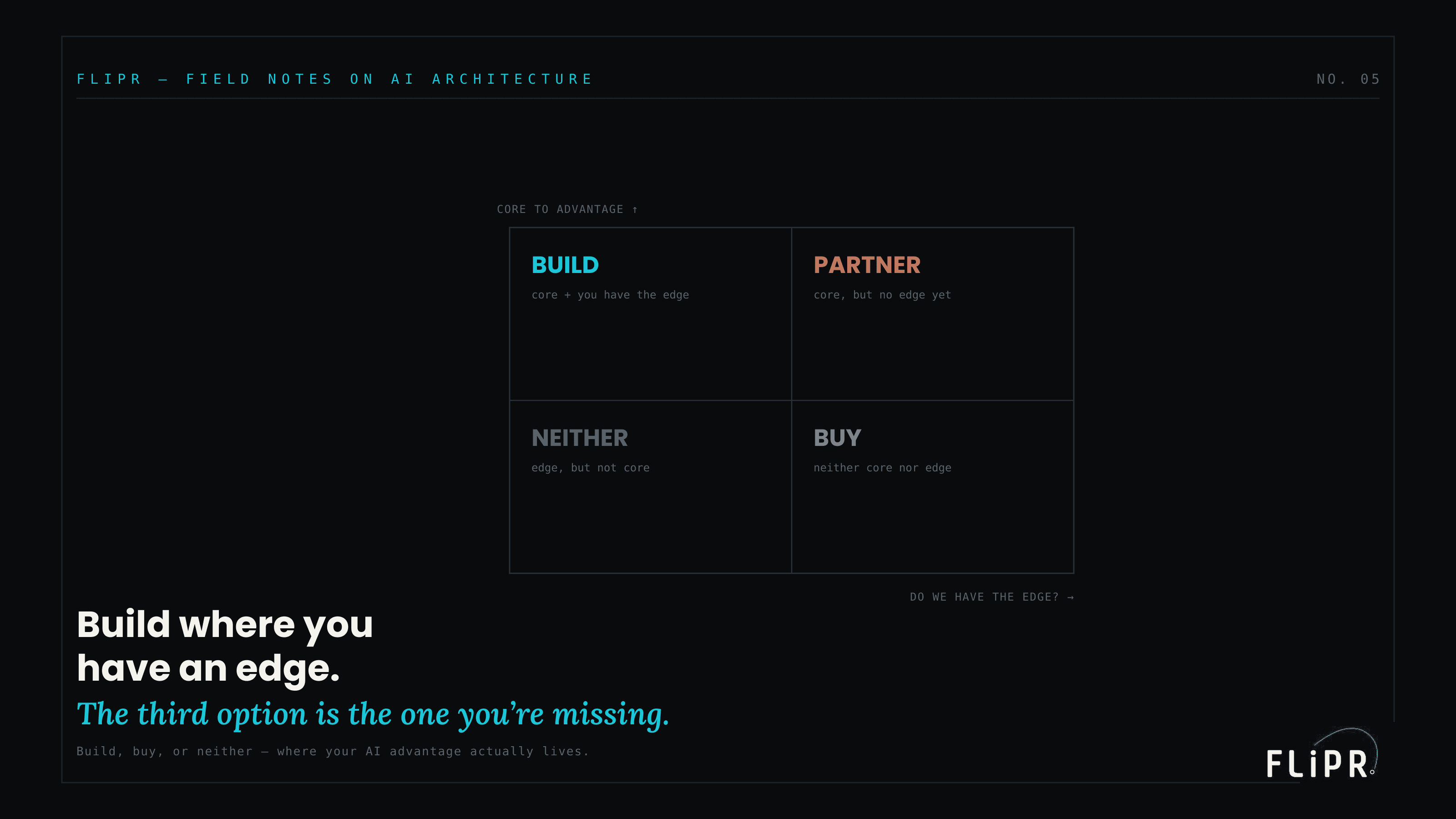
The build-vs-buy AI question is wrong: you needn't own a layer to benefit. The Advantage Map decides build, buy, or neither — by edge and by what is core.
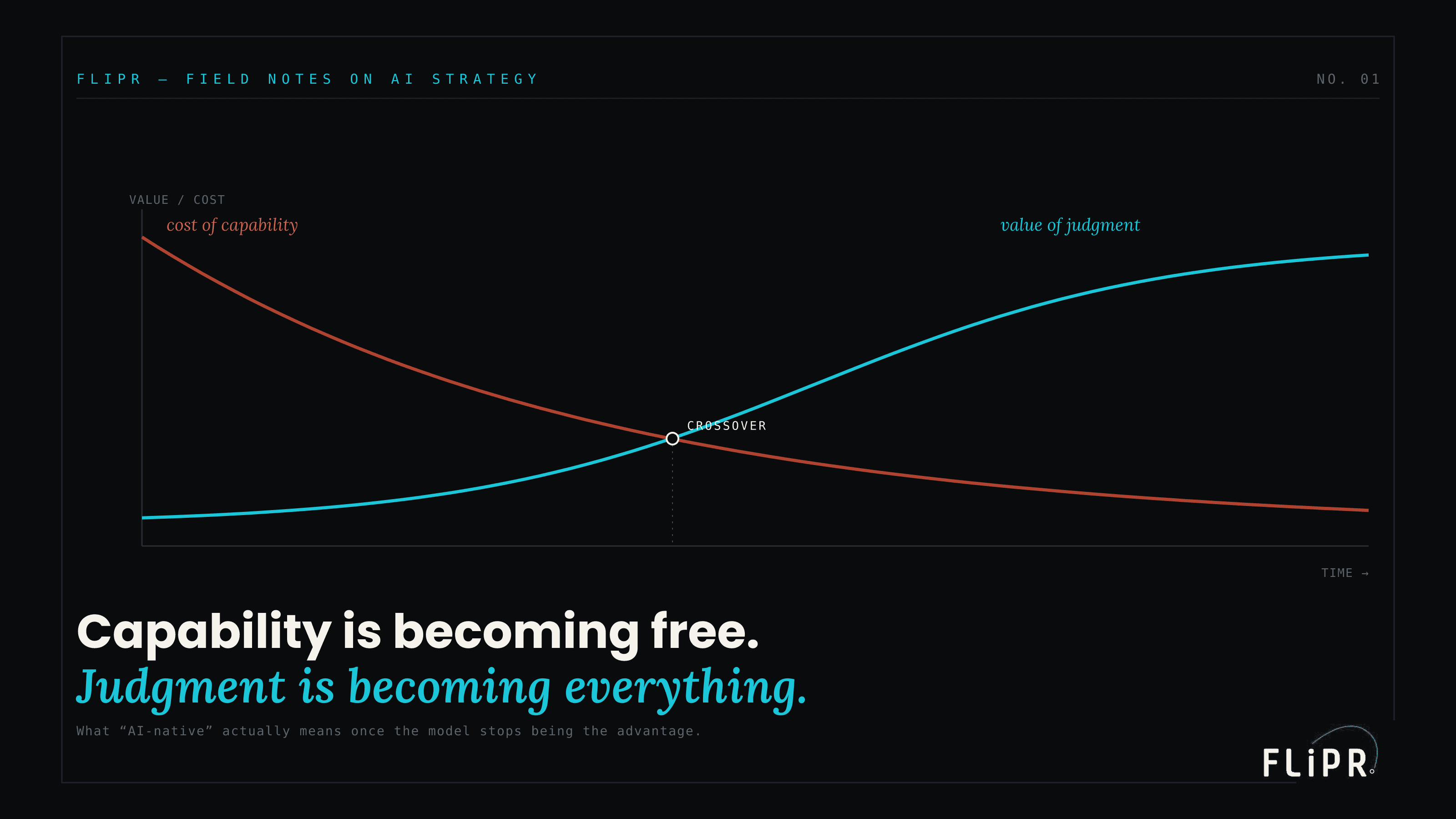
AI capability is commoditizing fast. The durable advantage is judgment: where to apply it, what to refuse, how to earn trust, what to fund. The AI-native stack.
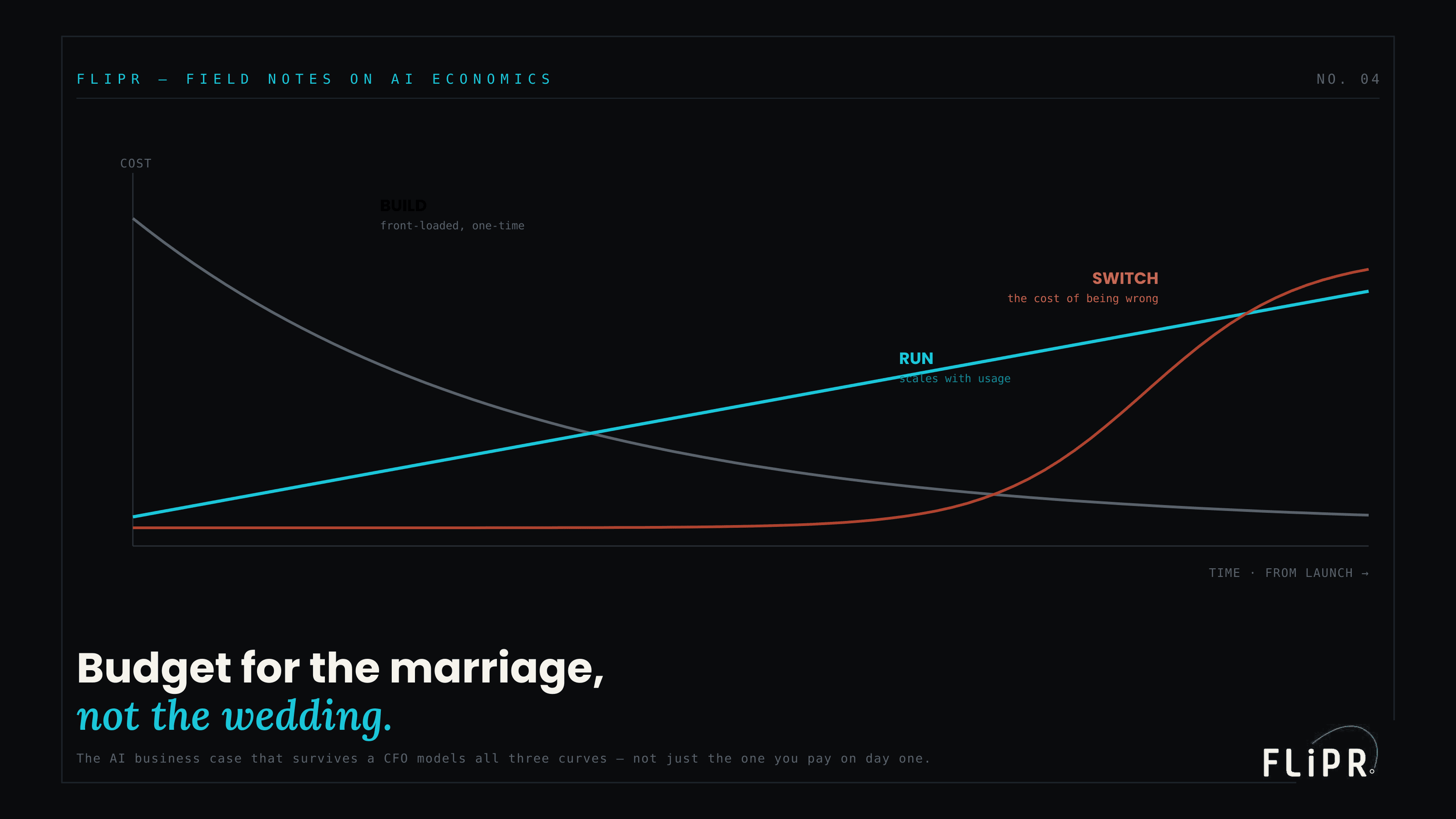
Most AI business cases model only build cost and fail within a year. The Three Cost Curves — build, run, switch — model and defend an AI investment to a CFO.
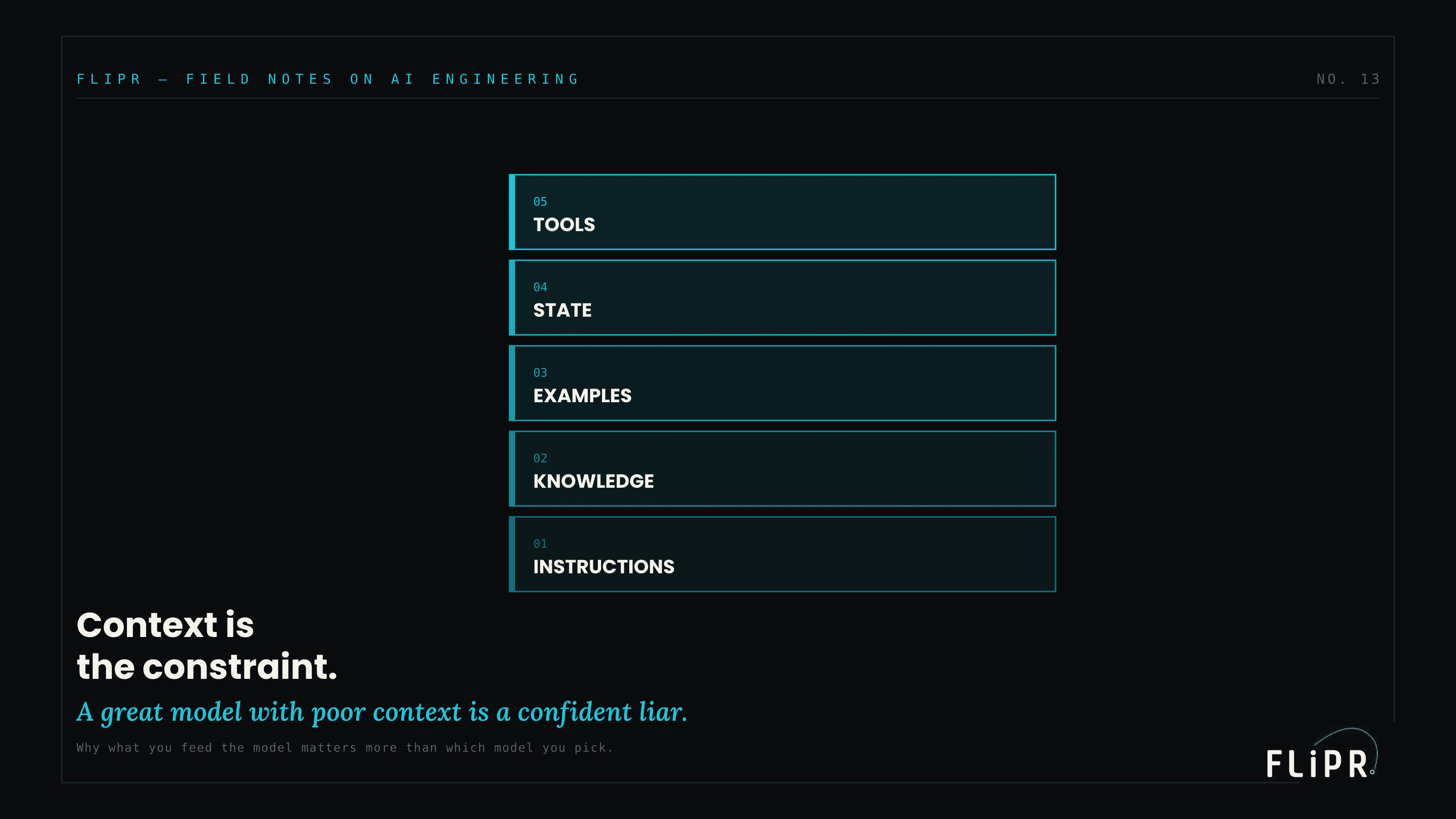
A capable model with poor context is a confident liar. The Context Hierarchy shows why context engineering beats model selection for AI output quality.
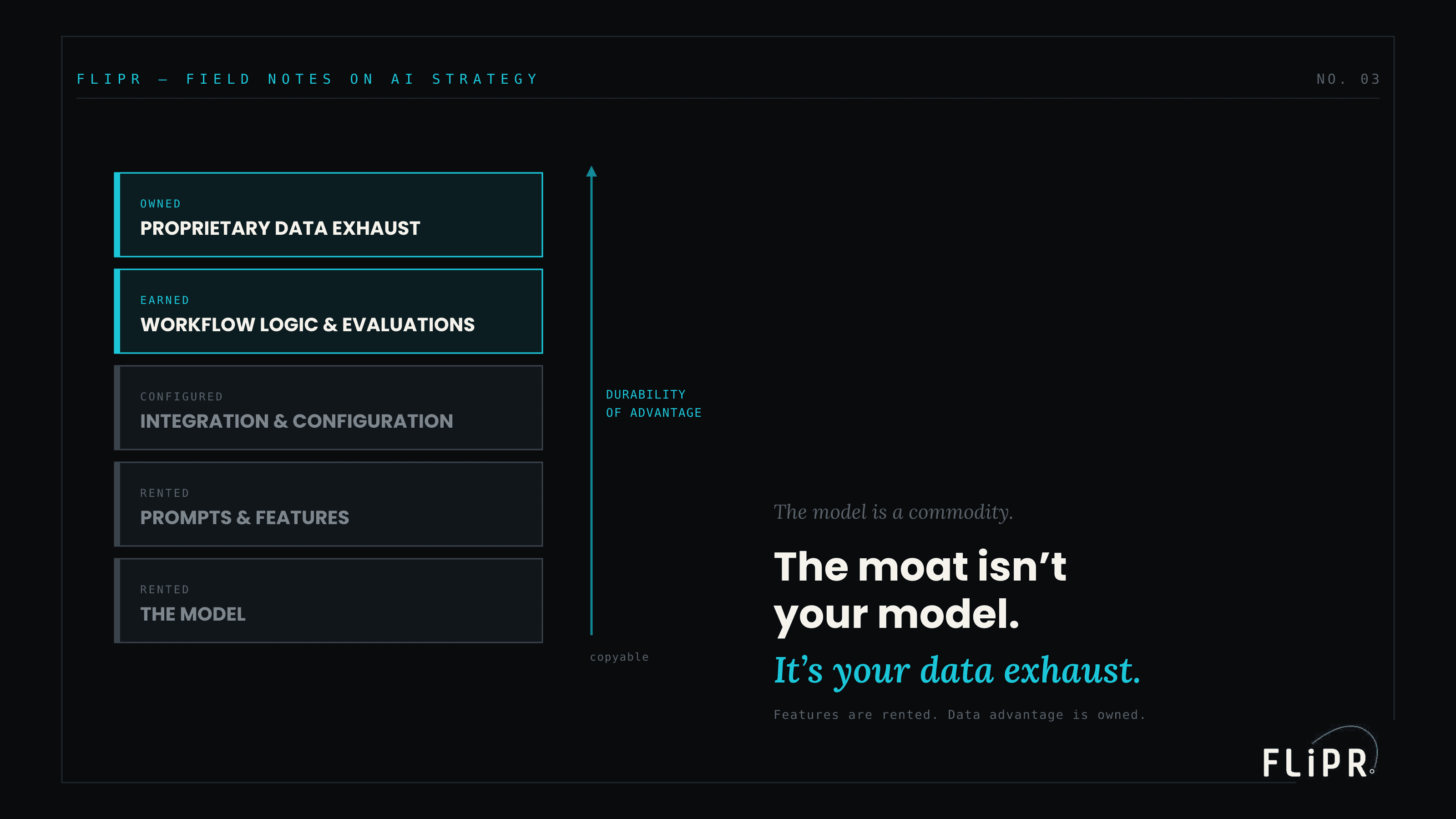
AI models are commoditizing. Durable advantage lives in data exhaust: interaction data, expert corrections, evaluation sets, workflow logic. The real AI moat.
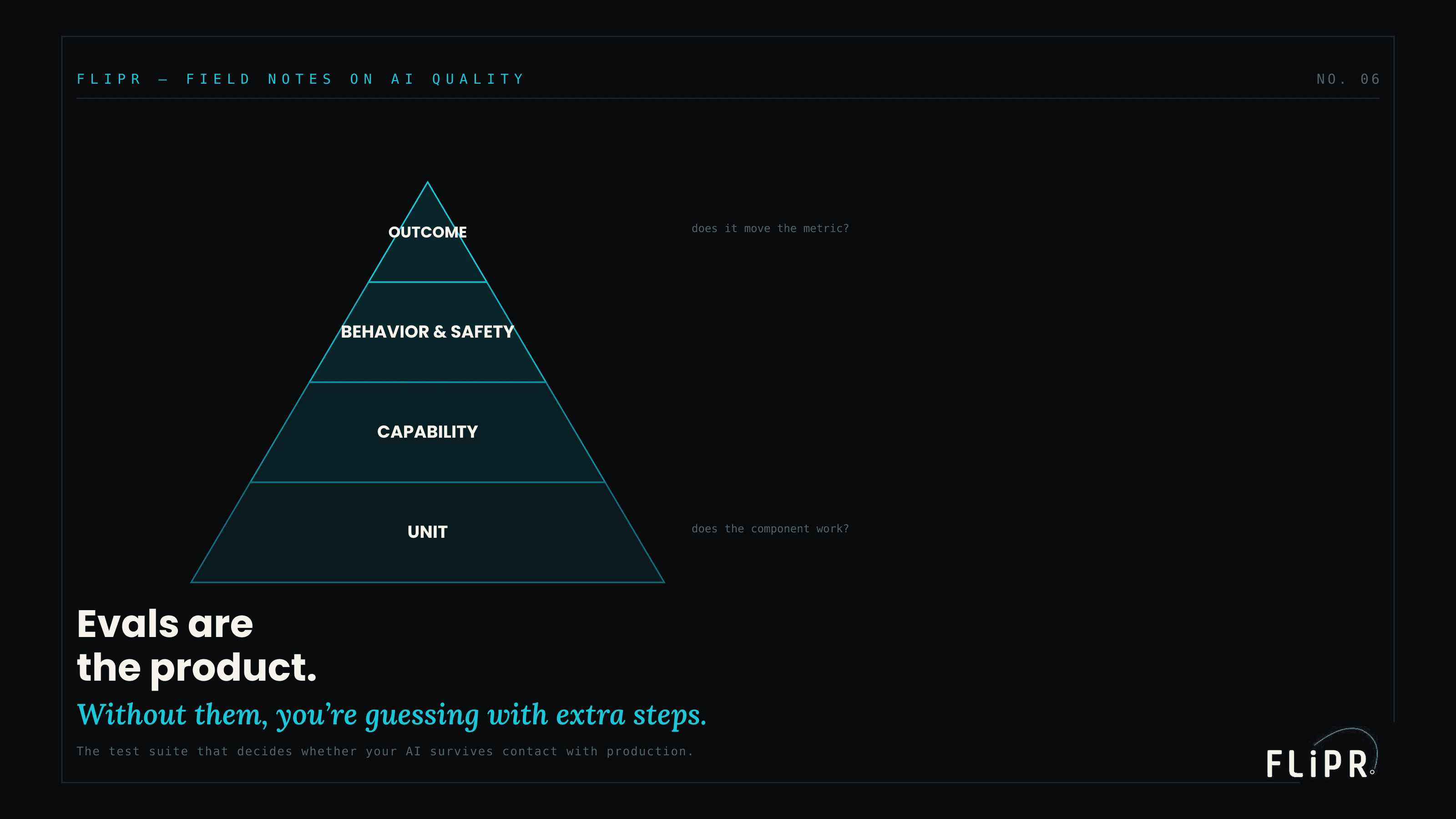
In AI the eval suite is the product — the only thing telling you whether a change helped or hurt. The Evaluation Pyramid: unit, capability, behavior, outcome.
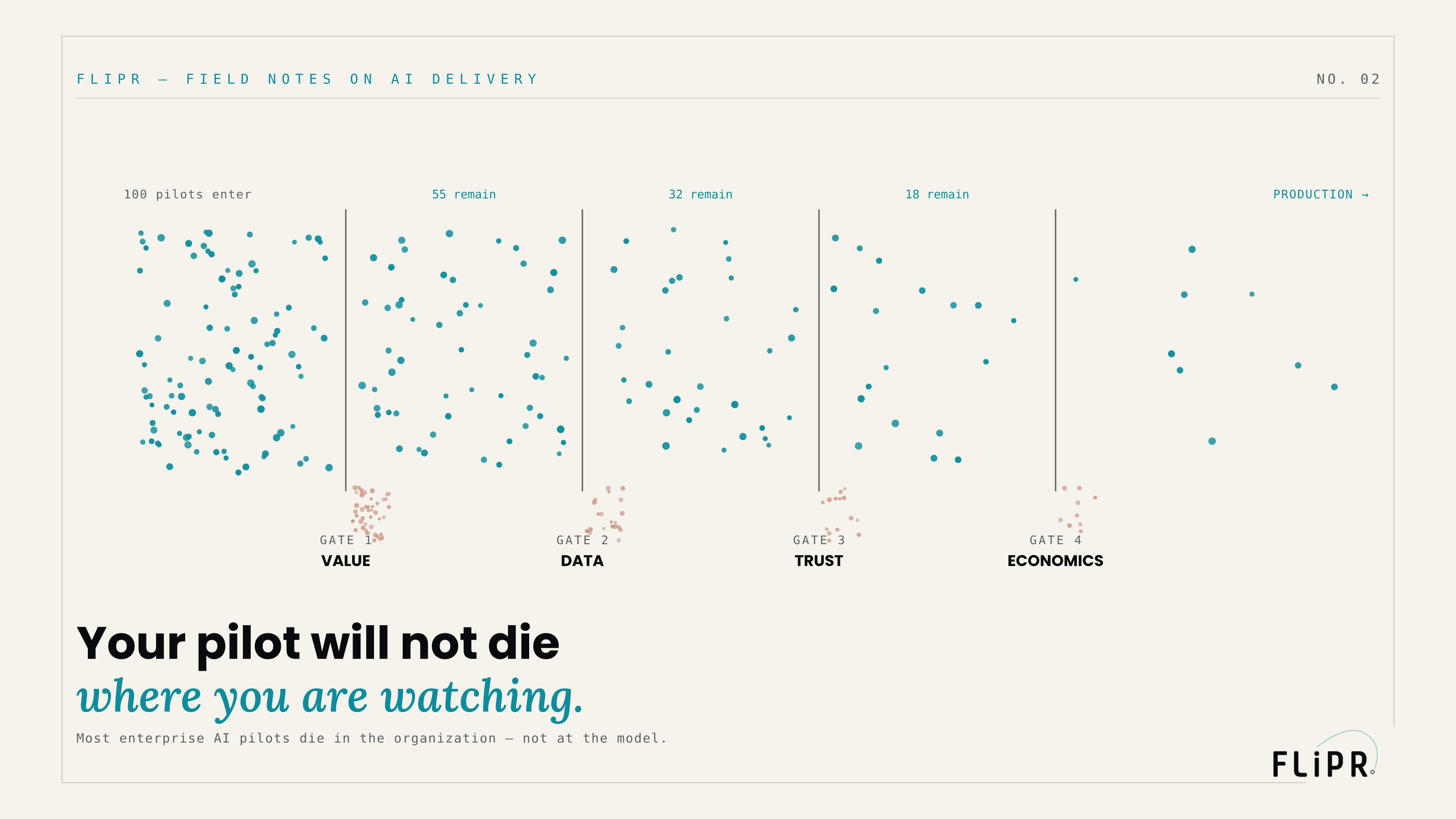
Most enterprise AI pilots fail in the organization, not at the model. The Four Gates — Value, Data, Trust, Economics — decide which pilots reach production.
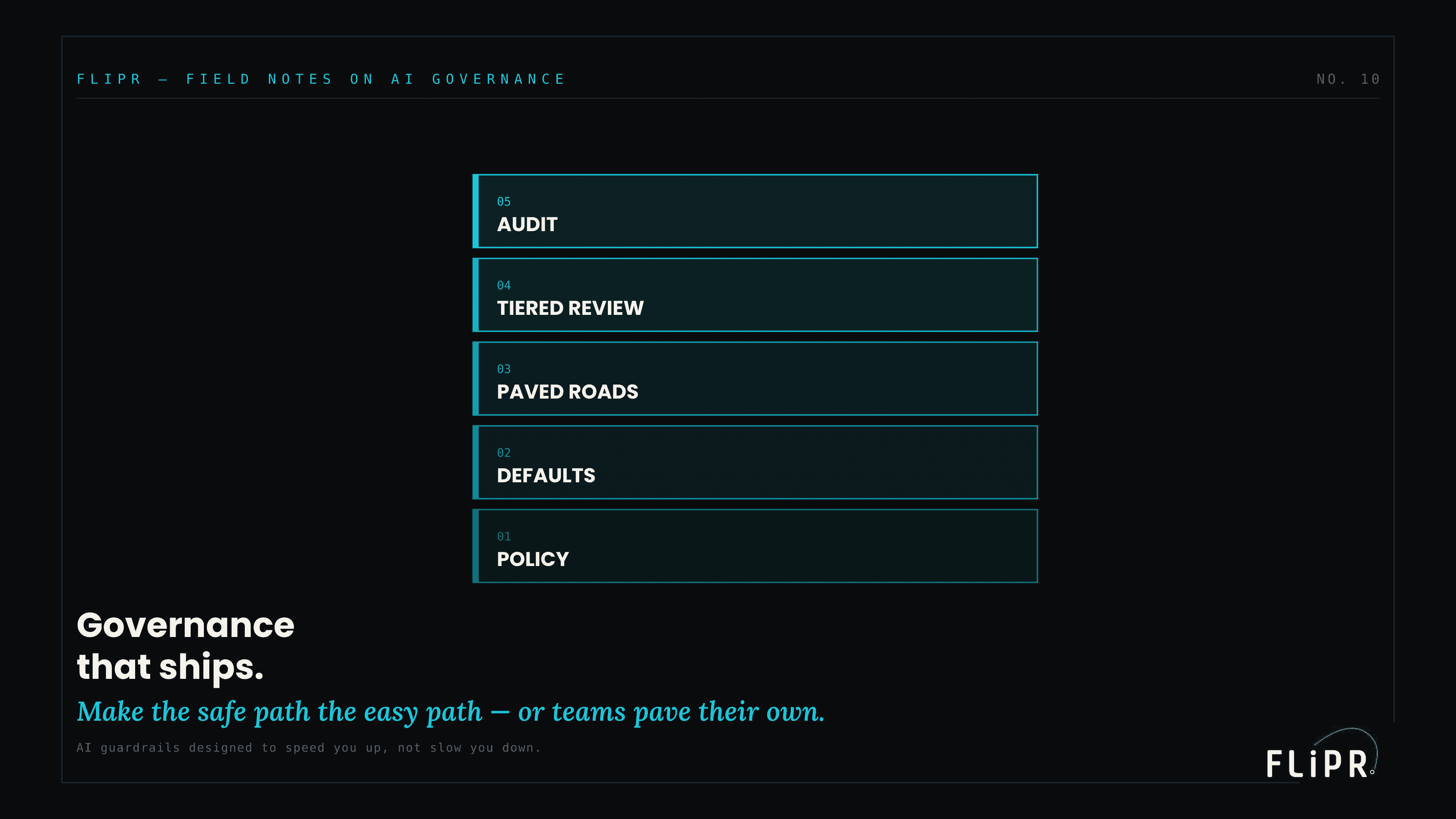
Most AI governance is a gate teams route around. The Guardrail Stack makes the safe path the easy path — policy, defaults, paved roads, tiered review, audit.
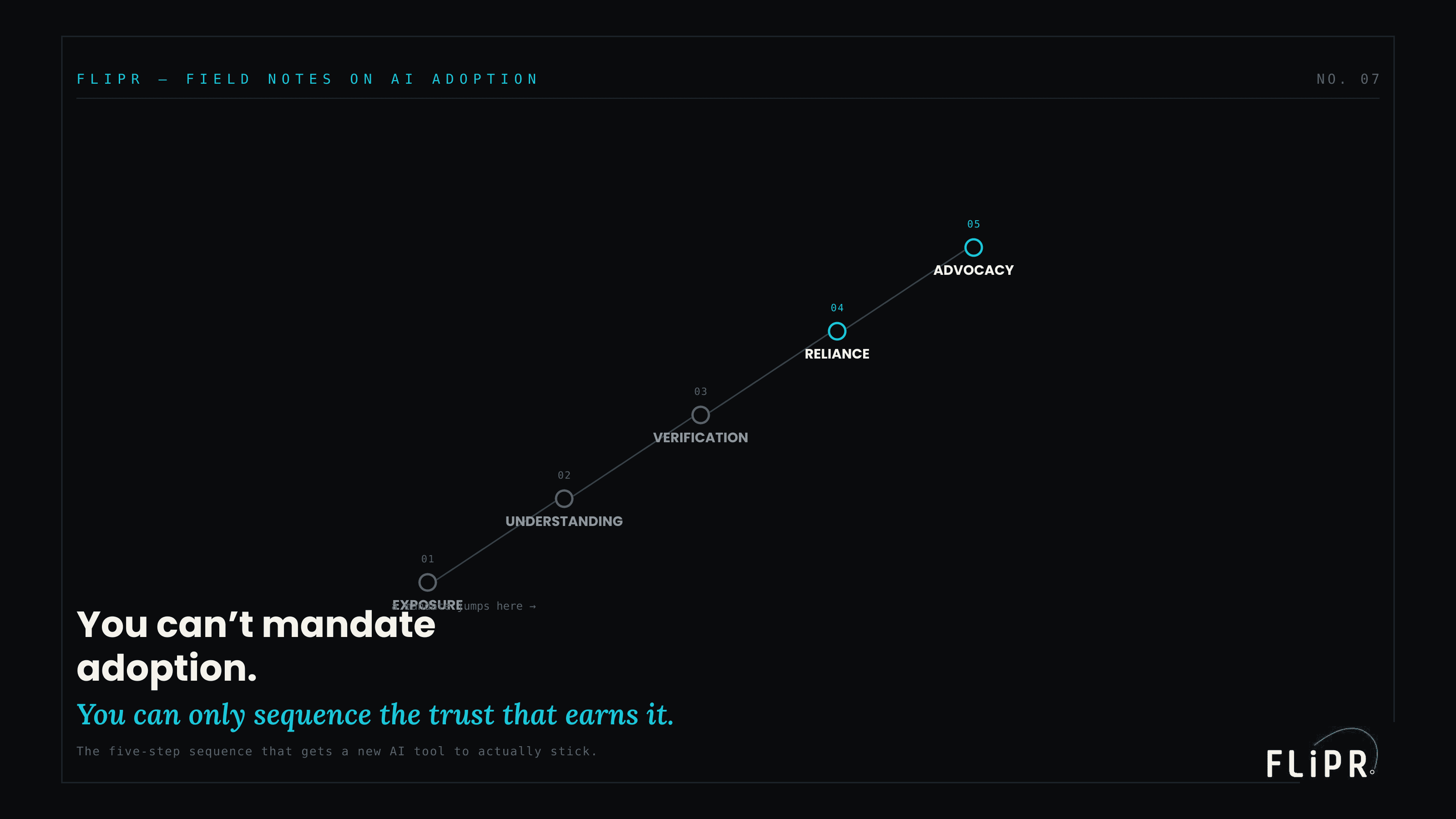
You cannot mandate AI adoption — it is trust earned in a fixed order. The Trust Ladder: exposure, understanding, verification, reliance, then advocacy.
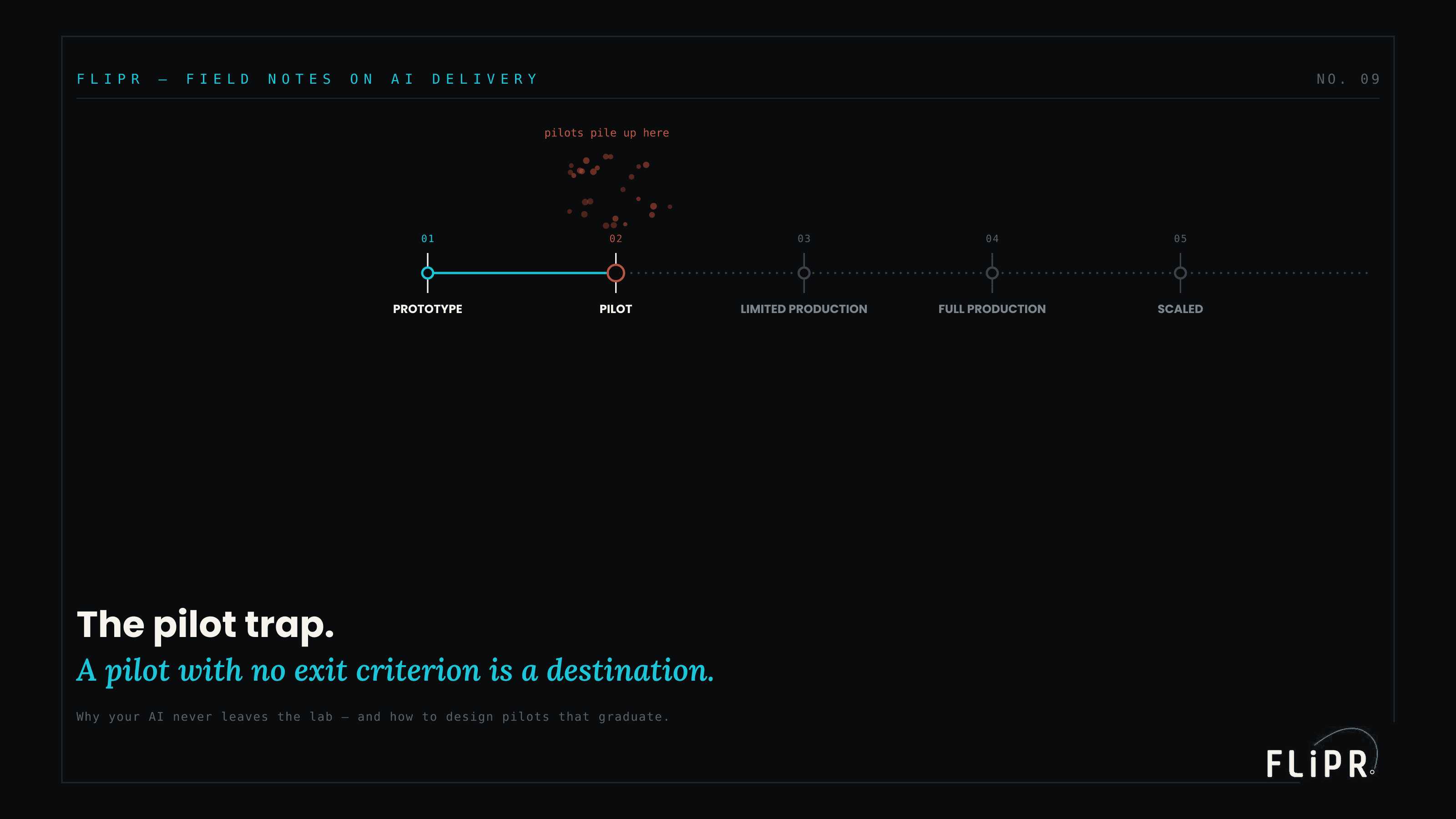
Most AI gets stuck in perpetual piloting. The Production Gradient turns the leap to production into a path of stations with exit criteria, so pilots graduate.
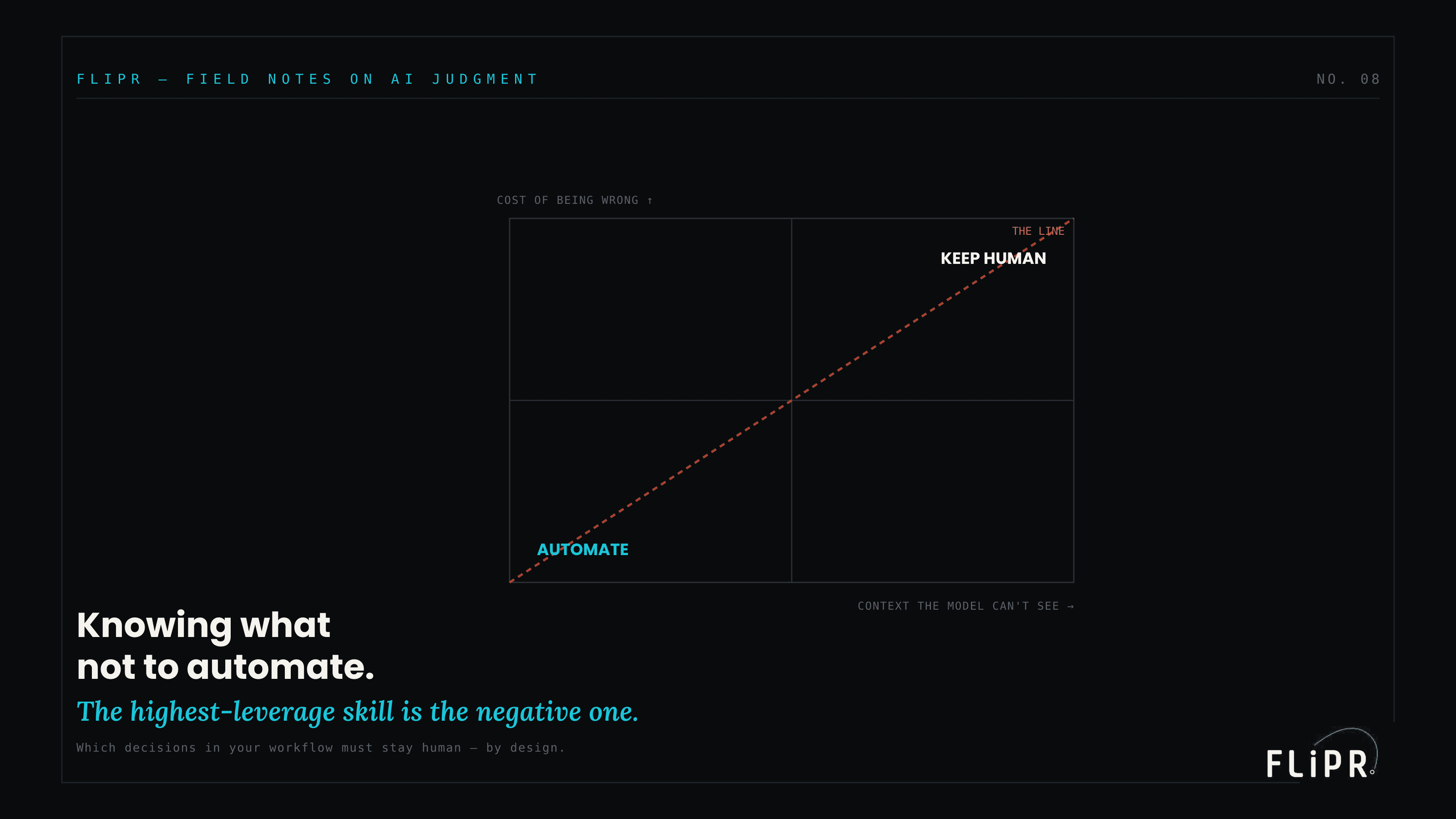
The highest-leverage AI skill is knowing what not to automate. The Automation Line maps stakes against the context a model can't see to choose what stays human.
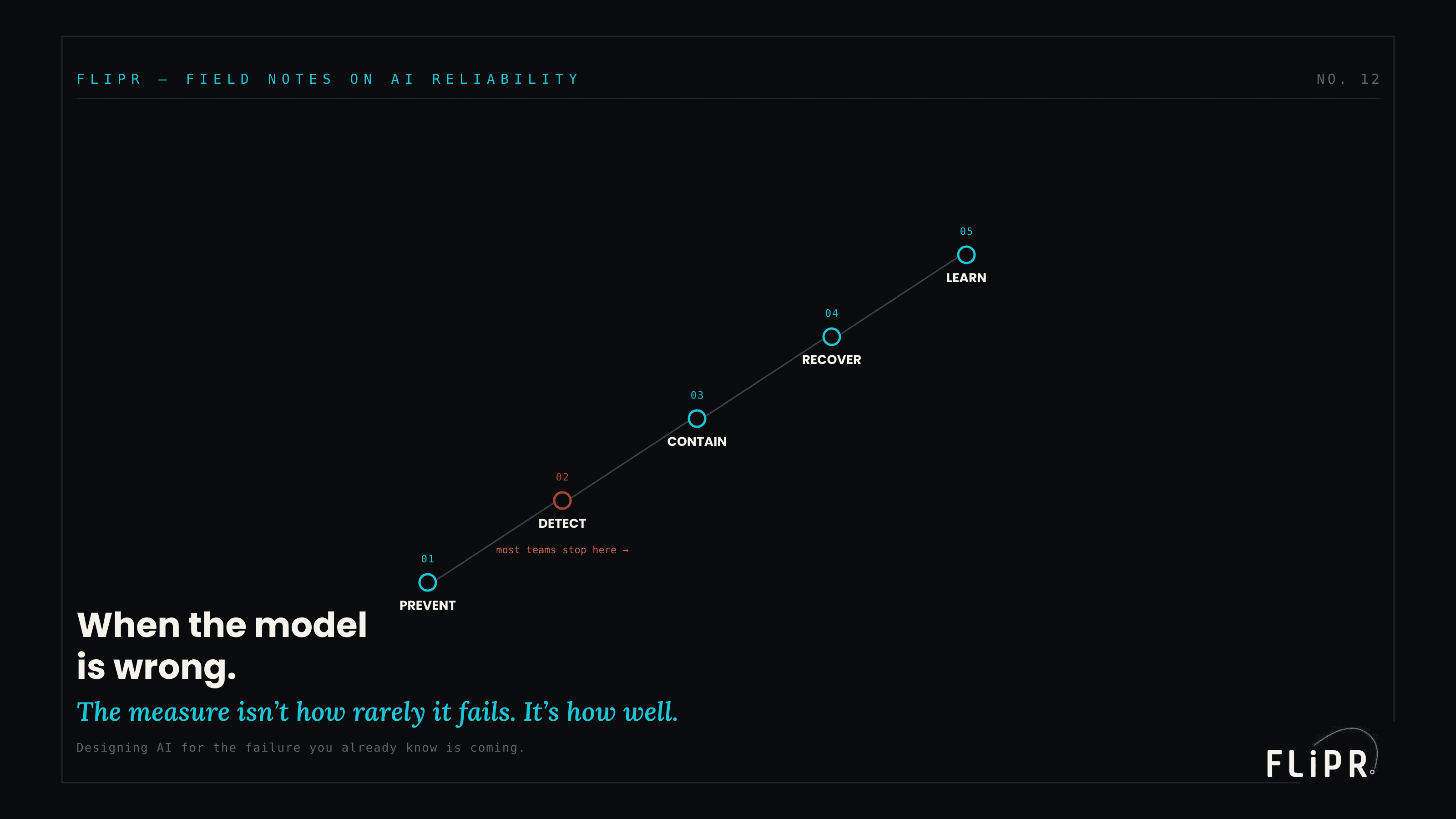
A probabilistic system will be wrong in production. The Failure Ladder — prevent, detect, contain, recover, learn — designs the response, not just detection.